Clergy
The bishop, priests, and deacons teach, sanctify, and shepherd the local Church in communion with the universal Church.
A young and vibrant local Church rooted in the Archdiocese of Manila and entrusted with the pastoral care of southern Quezon City.
The Diocese of Cubao grew from the pastoral reorganization of Quezon City and was canonically erected by Pope Saint John Paul II.
Its story is one of a rapidly growing urban Church learning to serve diverse communities through parish life, religious congregations, schools, shrines, social ministries, and formation.
Manila Archbishop Jaime Cardinal Sin divided Quezon City into the Vicariates of Santa Rita, Holy Family, Saint Joseph, and Santo Niño.
The ecclesiastical district was divided into north and south to respond more closely to pastoral needs.
The boundaries were revised and the southern district was renamed the Ecclesiastical District of Cubao.
The papal bull Quo Satius Provideretur erected the Diocese of Cubao. Immaculate Conception Parish became its cathedral.
Most Rev. Honesto F. Ongtioco was installed as the founding Bishop of Cubao.
Most Rev. Elias L. Ayuban Jr., CMF, DD, JCD became the second Bishop of Cubao.
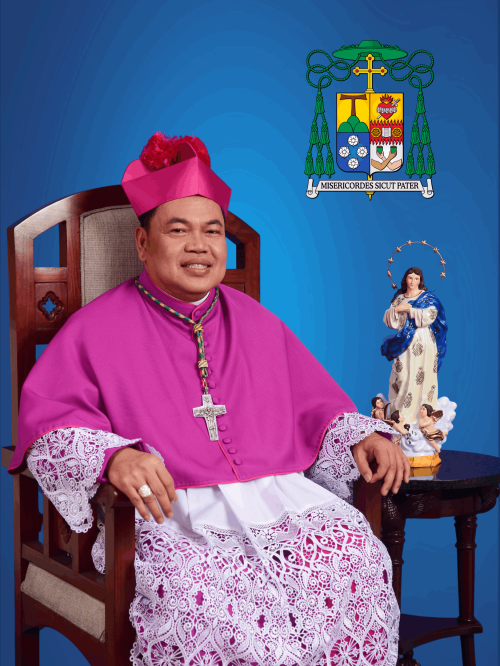
Bishop Elias was born on January 1, 1968, in Parang, Maguindanao, and was raised in Loay, Bohol. He professed vows in the Claretian Missionaries and was ordained a priest on March 9, 1996.
He earned licentiate and doctoral degrees in canon law from the Pontifical Lateran University in Rome and served in formation, governance, teaching, ecclesiastical tribunals, and missionary leadership. Before his episcopal appointment, he was Provincial Superior of the Claretian province serving the Philippines, Vietnam, Australia, and Myanmar.
His coat of arms joins the symbols of the Diocese of Cubao with his Claretian and missionary identity. His motto expresses the heart of his ministry: mercy patterned after the Father.
Official biographyThe Diocese understands its vitality through the communion and shared responsibility of ordained ministers, consecrated persons, and lay faithful.
The bishop, priests, and deacons teach, sanctify, and shepherd the local Church in communion with the universal Church.
Religious institutes enrich Cubao through prayer, mission, education, health care, formation, and service to the poor.
Families, young people, professionals, workers, and parish servants bring the Gospel into every sector of society.
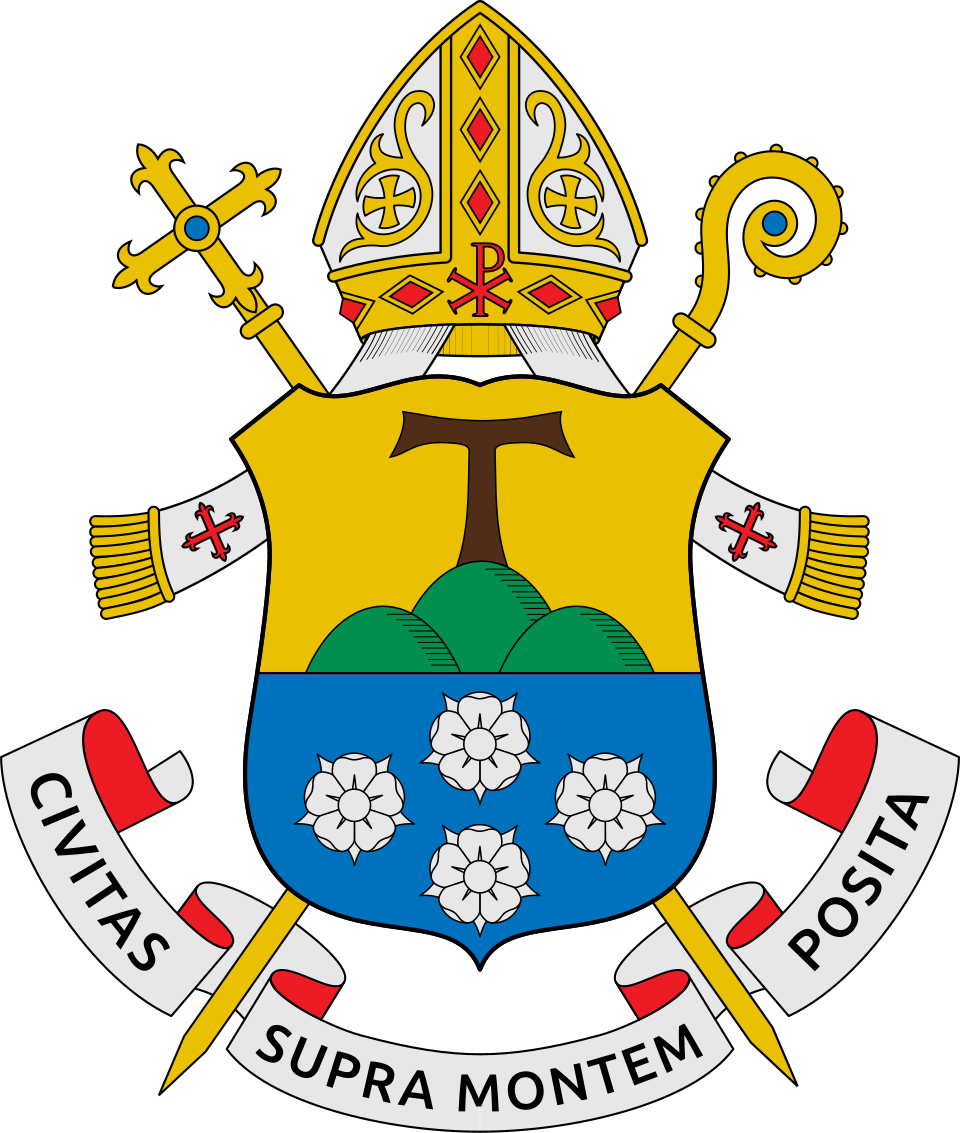
The diocesan shield places a brown Tau cross upon green hills on a gold field, recalling Quezon City’s original landscape and its description as a “city set on a hill.”
Four white roses on blue commemorate the Year of the Rosary in which the diocese was founded and the Mysteries of Light added by Pope Saint John Paul II. Blue also honors the deep Marian devotion expressed in Cubao’s national Marian shrines.
Each vicariate gathers neighboring parishes for pastoral coordination, fraternity, formation, and shared mission.
Includes the cathedral, New Manila, Roxas District, Kamuning, and neighboring communities.
Includes Cubao, Greenmeadows, Eastwood, Project 4, and nearby communities.
Includes San Francisco del Monte, Santa Mesa Heights, Damar, and Balintawak.
Includes Project 7, West Triangle, Paltok, Bungad, and Phil-Am Homes.
Includes Bago Bantay, Project 6, Project 8, Pag-asa, and GSIS Village.
Includes Diliman, Loyola Heights, Katipunan, Kamias, Pinyahan, and Sikatuna Village.
The diocesan curia assists the bishop in pastoral leadership and administration.
Includes the Vicar General, Chancellor, Vice Chancellor, Finance Administrator, episcopal vicars, Judicial Vicar, Moderator of the Curia, and consultative bodies required by Church law.
View the current official curia directoryThe Bishop’s Office, Chancery, Human Resources, Treasury, Audit, Properties, building administration, health care, and tribunal provide canonical and administrative services.
Contact an officeWorship, catechesis, basic ecclesial communities, social services, communications, family and life, youth, vocation, ecumenism, and other ministries coordinate the Church’s mission.
Ministry directoryHistorical and organizational information is based on the official diocesan history, official bishop biography, and the current diocesan directories. Personnel assignments can change; consult the official directory for the latest listing.